


With businesses in the UK generating around 32.6 million tonnes of waste every year, their support is crucial to helping the country meet its net zero ambitions.
It is easy to believe that large corporations have the biggest impact on the environment, but smaller companies are estimated to account for around 50% of all UK business-driven emissions.
While a report by the British Business Bank shows that 35% of smaller businesses cite cost as a barrier to becoming more sustainable, following the three main principles of a circular economy – reduce, reuse, recycle – can actually save money.
Commercial waste disposal can be expensive, with a risk of hefty fines for those who fail to comply, while reducing resources could save the average business £24,000. Sustainable practices also have the potential to improve reputation, with more than a third of consumers stating that they sometimes choose to shop with environmentally friendly retailers.
1. Ditch single-use plastic
Every year, about 8 million tons of plastic waste escapes into the oceans, threatening marine life and ecosystems. All types of packaging require materials and energy to manufacture them, and it is impossible to recycle some.
Providing staff with reusable glasses, mugs, plates, bowls and cutlery is an easy way to start on your journey to becoming a sustainable workplace. Going a step further by installing a water dispenser or coffee machine will stop staff going out of the office and buying disposable options.
Restaurants, cafes and takeaways can reduce their environmental impact by offering to pack food and drink in reusable containers, while shops can reduce single-use packaging by stocking loose items and promoting the use of reusable bags. North London Waste Authority offers a free promotional pack of stickers and posters to businesses wanting to show customers that they welcome refills and support the reusable revolution.
2. Go paperless
Image
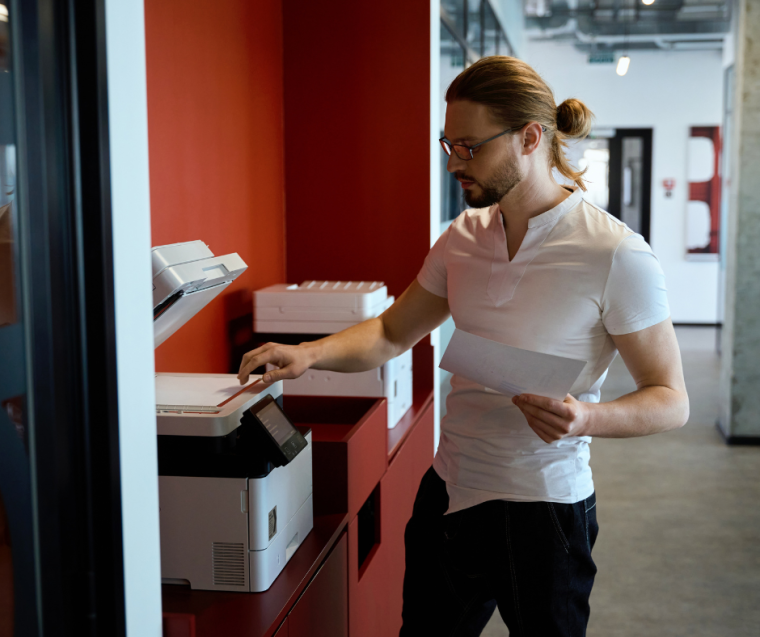
In today’s digital world, it is easier than ever to print less by moving to paperless meetings, viewing documents online and using remote proofing tools. The average UK office worker prints 6,000 sheets of paper a year- of which around 62% is wasted or unnecessary – but setting defaults on printers to print in black and white and double-sided could save up to 50% on costs.
Go even further by reusing envelopes and boxes where possible, and converting scrap paper into handy notepads.
Restaurants, cafes and takeaways can opt for washable fabric tablecloths over wasteful paper ones, while shops can move towards digital receipts.
3. Cut food waste
Image

Around 32% of the rubbish that we dispose of in north London is food waste, with the UK's hospitality and food service sector throwing away around 1.1 million tonnes each year. Restaurants, cafes and takeaways can help reduce this figure by offering a choice of portion sizes, preparing as much to order as possible, and ensuring food with the shortest use-by dates is used first. Promoting ‘doggy bags’ means leftovers don’t go to waste, with apps such as Too Good to Go providing a platform for businesses to sell surplus food at a reduced price.
Businesses which organise catered meetings should take care not to over order, with unavoidable leftovers offered out to staff. If outdoor space is available, composting is a great way to turn fruit and vegetable waste into nutrient-rich fertiliser.
3. Work with sustainable suppliers
Finding the right suppliers is key to reducing overall carbon emissions and improving your environmental impact. Shops, restaurants, cafes and takeaways can choose to source their stock locally, meaning less energy is required to transport them. Work with suppliers to switch to biodegradable, compostable, or recyclable packaging, and chose eco-friendly concentrated cleaning products in refillable containers.
Offices can stock their stationary cupboards with paper made from recycled content, refillable pens, and pencils made from renewable materials such as bamboo. Look out for Forest Stewardship Council (FSC) certification and talk to your suppliers to ensure products are sustainably made and use less energy to produce.
5. Recycle more
A lot more waste can be recycled than many people realise, so it’s important to put the right things in the right bin. Consider placing a paper bin next to your office printer, and another recycling bin next to your kitchen waste with clear guidelines on what can be recycled. Light bulbs, batteries and printer cartridges can also be recycled through specialist companies.
One of the fastest growing sources of waste from north London businesses is waste electrical and electronic equipment (WEEE), which can often contain hazardous substances which require specialist treatment. Legislation states that businesses must separate WEEE from other waste, dispose of them through a qualified waste management company, and keep records. Some electrical waste can also be returned to the original retailer to dispose of correctly.
Shops could consider arranging a joint recycling collection with other local businesses to save money, while restaurants, cafes and takeaways can have cooking oil collected and turned into eco-friendly biofuel.
6. Choose second hand
If we want to reverse climate change, we must stop producing so many new things and use what we already have in circulation. For businesses starting out, buying second hand furniture is a great way to save money while protecting the environment – whether it’s through a charity shop, reuse organisation or online auction. If you are buying new, then try to invest in good quality items that are built to last.
From a wobbly chair in a restaurant to a faulty computer in an office, always try to repair items before you throw them away. There are some fantastic organisations in north London that will help you get started. You can also donate unwanted items.
If you give out staff rewards, birthday gifts or organise ‘secret santa’, then make your own, opt for vouchers or experiences or pick something second hand.
7. Think green
Image

For businesses with a strong sustainability focus, they can go even further than reduce, reuse, recycle. Lighting uses around 20% of all electricity generated in the UK, according to the Carbon Trust, but emissions can be cut by replacing halogen bulbs with LED, utilising natural light in the summer months and installing motion-activated lights that only come on when someone is in the room. Encourage staff to switch off all electrical devices overnight and when they are not in use.
Consider whether business travel is necessary or if video conferencing can be an effective alternative, with public transport used over cars and taxis where possible.
Other ideas include running green challenges for staff to encourage sustainable workplace practices and forming a sustainability team to drive changes.
In the NLWA office, we’re big fans of using plants to create a calm environment, boost productivity, promote happiness and improve air quality!
Have we missed any top tips? If you would like to share your sustainable business ideas, email post.nlwa@nlwa.gov.uk
Published date