
North London Waste Authority’s Communications Manager, Chloe Chapman, was in Jamaica when Hurricane Melissa become the strongest storm to ever make landfall on the Caribbean island. Here she gives an insight into her terrifying experience and explores the long-lasting and devastating impacts of climate change.
Image
When Melissa was first mentioned, we had no idea that the tropical storm was going to escalate dramatically into one of the strongest Atlantic hurricanes on record.
The unusually hot sea – even by Caribbean standards - fuelled the intensity of Melissa, before she made her historic landfall in Jamaica as a category 5 monster. Storms strengthen by pulling energy from the oceans they cross, with scientists from US-based Climate Central believing that climate change made the favourable conditions in Melissa’s case up to 900 times more likely.
I was with my family on the north coast of the island at the time, having flown out two weeks earlier for my sister-in-law’s wedding. We should have already been back in the UK by the time Melissa arrived, but with airports closed we had no choice but to make our way to the hotel storm shelter on Tuesday 28 October.
Staff did their best to distract us from the destruction happening outside, screening films, playing music and organising games to entertain the hundreds of guests holed up in what would normally be the on-site theatre.
It quickly became clear that they hoped the booming speakers – by this point powered by a generator - would drown out Melissa, but as she headed our way on her path out of Jamaica her rumblings became hard to ignore.
Suddenly the power went out, and she could be heard in all her glory. It sounded like a train was speeding along the roof, but we knew it was in fact dangerous winds howling at up to 185mph.
As I held my ten-month-old son in my arms, I sobbed, not knowing how I could possibly protect him if the roof collapsed. My partner sat in silence beside me, holding a pillow over the head of our sleeping four-year-old daughter.
I then felt water trickle over me, realising that the ceiling above us was leaking. Over on the wall, water poured out of the air conditioning vents.
We later learned that the roof on the theatre – the safest place in the hotel – had five layers. By the time Melissa had started her onward journey to Cuba, just one remained.
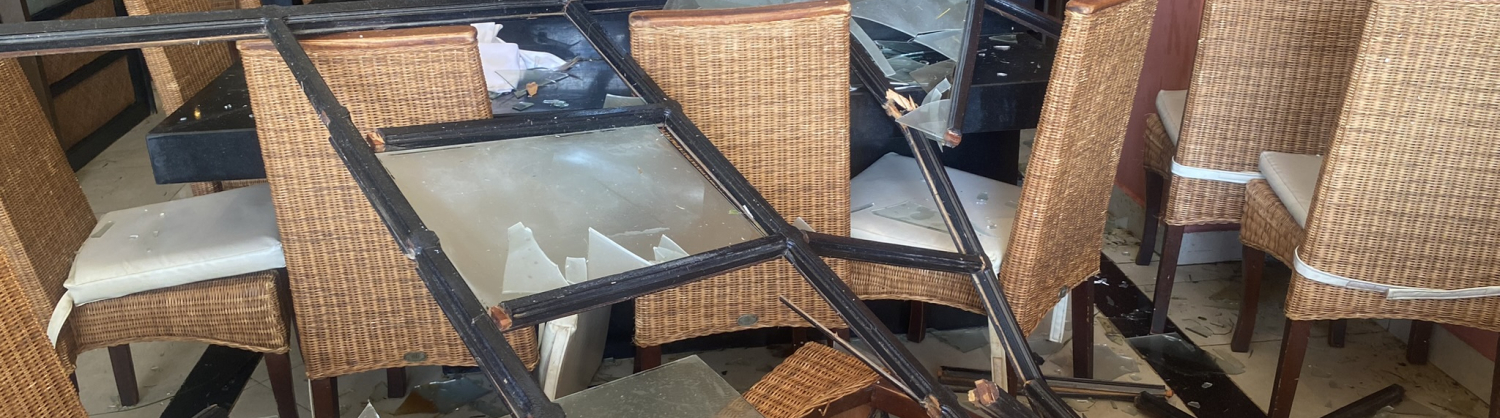
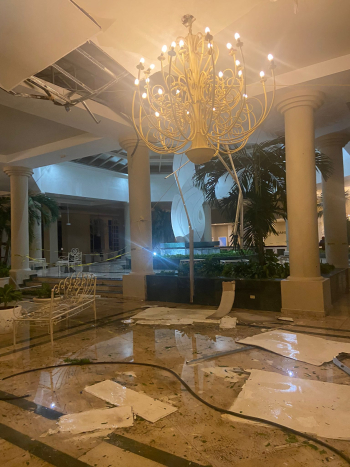
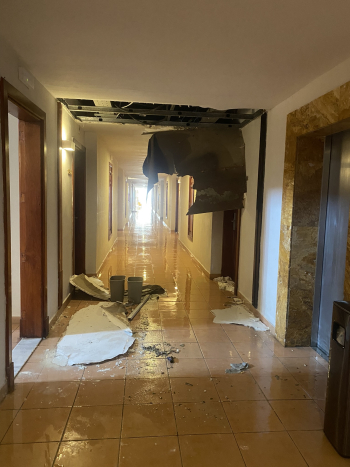
Bedrooms, restaurants and the hotel lobby also faced her wrath, with windows smashing and ceilings collapsing. Trees were uprooted, completely changing the landscape, cars were crushed, and hallways were flooded.
Out on the road, Melissa downed power lines, with locals predicting it will be months before they have electricity or phone signal again. At least 32 people were killed across the island, entire communities were reduced to rubble, crops were flattened and livelihoods destroyed.
Despite having lived in Jamaica for the first 19 years of her life, my mother-in-law had never experienced a hurricane before. But global warming made Melissa four times more likely, according to researchers at Imperial College London’s Grantham Institute.
The sad fact is that the countries which contribute the least to global carbon emissions are the ones facing the worst consequences. Jamaica contributes just 0.02% - compared to 30% from China, the largest contributor – but has been left with an estimated $7billion worth of damage.
While the UK has worked to halve its own environmental impact since 1990 and is now responsible for less than 1% of global emissions, Hurricane Melissa is a stark reminder of just how devastating our new normal could become if we don’t take urgent action.
Jamaica might be thousands of miles away from us here in north London, but that doesn’t mean it can’t be at the forefront of our minds when it comes to reducing the waste we produce.
Image
Published date